
NSY Hair transparency eliminates the inflated commercial real estate markups built into traditional luxury salon service networks. When evaluating typical premium salon invoices, asset analysis reveals that a significant portion of capital spending funds high-overhead retail spaces rather than polymer base innovations, leaving the underlying hair system substrate unoptimized.
Table of Contents
1. The $1,800 Invoice Post-Mortem: Dissecting Commercial Real Estate Overhead Across Traditional Retail Networks
When analyzing the pricing structures deployed by traditional hair replacement clinics, the financial ledger exposes significant structural inefficiency. A line-by-line audit of traditional salon operating costs shows that a substantial portion of consumer capital does not fund polymer innovation, knot-bleaching precision, or cuticle alignment. Instead, capital is frequently consumed by premium commercial real estate leases and organizational overhead.
I observe this pattern on a regular basis at my studio. When clients present me with invoices from high-end boutiques, the technical line items are completely blurred. They believe they are investing strictly in elite hair restoration, but I can see that their expenditure is heavily skewed toward subsidizing a premier retail footprint rather than the underlying hardware. This structural misallocation damages the consumer asset. High retail markups frequently correlate with lower hardware rotation frequencies. When a single hair unit costs thousands of dollars due to built-in real estate friction, you naturally try to extend its service life far past its material limits, leaving the system bonded for six to eight weeks continuously. The chemistry tells a different story: keeping a delicate membrane attached to a warm scalp for extended durations forces an intense accumulation of un-emulsified lipophilic residues and trapped perspiration. This moisture pooling triggers accelerated polymer network fatigue, ruining the base long before you receive equivalent value for your capital layout.
2. Rational Capital Demolition in ZIP 94111: Neutralizing Artificial Ambient Branding and Salon-Manufactured Surcharges
2.1 The Chandelier Tax Analysis: Allocating Capital to Material Engineering Versus Premium Environments
The premium pricing model inside ZIP 94111 (San Francisco Financial District) relies entirely on a concept classified as the ‘Chandelier Tax’ of High-End Hospitality. Here’s the deal: you are paying an inflated capital premium to subsidize the crystalline hardware suspended above your head, rather than the prime-grade steak on your plate. In the context of non-surgical hair restoration, traditional clinics wrap an ordinary, mass-produced unit in the artificial luxury of private suites, aromatherapy, and concierge services. This ambient branding hides a predatory pricing scheme.
Why does this matter? An expensive light fixture or a scented candle has zero impact on the cross-linking stability of an adhesive bond or the natural follicle exit angle of a hair strand. When a salon prioritizes the physical environment over material engineering, you receive a sub-optimal unit hidden behind luxury presentation. True expertise is found in the physical unit itself—the thickness of the membrane, the resilience of the lace, and the precision of the ventilation. Subsidizing a salon’s real estate footprint does not change the physical breakdown of a synthetic matrix under intense daily wear.
2.2 Substrate Baseline Realities: Why Aromatherapy Premium Pricing Fails to Protect Polyurethane Membranes Under Financial District Stress
The micro-climate of the San Francisco Financial District introduces unique daily environmental variables. While local weather profiles stay relatively moderate, your high-stress corporate lifestyle creates intense, localized physical strain. When you undergo high-stress venture capital pitches or multi-hour boardroom negotiations, your cutaneous thermal output rises. This heat transforms secure liquid bonds into weak emulsions. According to consensus from specialized textile and polymer engineering bodies, synthetic polymer substrates face accelerated breakdown when subjected to continuous bodily heat and trapped perspiration.
No amount of salon-manufactured atmosphere or sensory pampering can alter this material reality. To completely neutralize this physical breakdown under high-cortisol trading stress, bypassing intermediated salon pricing to source a pure 0.03mm Ultra-Thin Skin substrate represents the definitive engineering pivot.
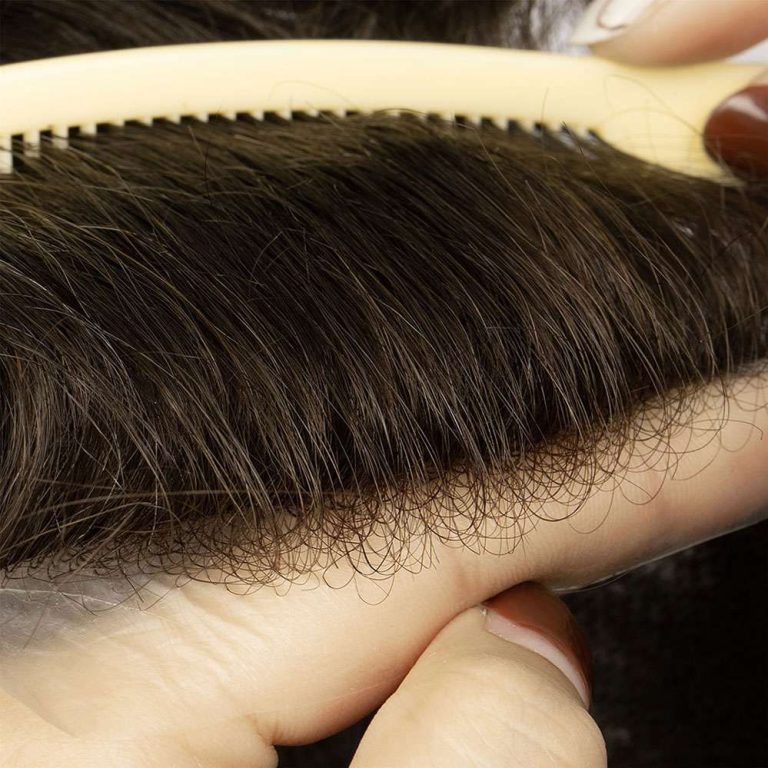
Fabricated with uniform high polymer density, this specialized 0.03mm polyurethane membrane eliminates the thermal insulation barrier common in thicker retail systems, facilitating immediate thermal equilibrium at the dermal boundary. This minimal physical profile allows the underlying adhesive to maintain its high-tension crystalline hold rather than succumbing to premature liquefaction or boundary creep. By allocating capital directly to this un-intermediated textile infrastructure instead of premium real estate overhead, your active hairline remains completely undetectable and dimensionally stable under the most rigorous boardroom inspection.
3. Smashing the 500% Premium Care Disguise: Exposing Price Markup Schemes Where Hardware Costs Sit Under 15%
Traditional distribution models frequently inflate end-consumer costs, directing capital allocations toward environment maintenance rather than raw material enhancements. When analyzing technical expenditures, a line-by-line breakdown clarifies the structural variance between non-rotated single-unit wear and engineered, proactive rotation frameworks.
| Material Evaluation Matrix | 24/7 Continuous Non-Rotated Cycle | NSY Dual-Stabilization Standard |
|---|---|---|
| Macromolecular Lattice Integrity | Accelerated Polymer Chain Degradation & Edge Warping | Uncompromised Structural Perimeter Invisibility |
| Interface Micro-Climate | Localized Vapor Pooling & Lipophilic Residues | Accelerated Gas Exchange & Rapid Evaporation |
| Adhesive Boundary Stability | Premature Interface Liquefaction & Boundary Creep | High-Tension Crystalline Interfacial Hold |
3.1 The Venture Capital Liquidation Framework: Auditing Private Hair Replacement Clinic Disinformation from the Studio Workbench
Traditional volume-driven distribution models often prioritize rapid transaction turnovers rather than long-term hardware preservation. By focusing less on mandatory extraction cycles and material resting phases, standard vendors allow substrates to reach premature degradation. This low-frequency optimization forces consumers into a reactionary buying loop, correcting predictable base wear with hasty, last-minute replacements instead of implementing an engineered, proactive rotation infrastructure. Based on longitudinal field metrics encompassing my vertically integrated, sovereign supply chain stripped of all emotional premium fluff, I have documented that actual hardware production costs across traditional clinics sit under fifteen percent of the gross invoice.
The remaining eighty-five percent of your capital allocation is consumed by intermediate distribution margins and marketing costs. To maintain this high-margin retail structure, traditional clinics deploy proprietary disinformation, telling wearers that hair systems are fragile medical items that can only be handled by an in-house technician. They create an artificial layer of mystery around basic polymer maintenance. They want you to believe that cleaning, descaling, and re-bonding a unit is too complex for an individual. It’s a calculated strategy to protect their high service fees and prevent you from realizing how little you are getting for your money.
4. Deploying the NSY Transparent Supply Chain Audit: Decoupling Physical Hardware from Service Labor
To entirely dismantle this predatory retail structure, my protocol introduces direct, non-intermediated integration with elite artisan-crafted units at pure, factory-direct wholesale cost. This methodology relies on separating the physical asset from the service labor. By decoupling the hardware from the salon chair, you gain complete transparency over what you are buying. This transparency allows you to allocate your capital toward actual material advancements, such as the ultra-fine hexagonal mesh matrix found in NSY Hair custom-ventilated Swiss Lace or the exact polymer density of signature NSY Ultra-Skin configurations.
This decentralized approach requires a dual-system rotation framework. Continuous twenty-four-seven wear exposes a single substrate to accelerated aging and compound mechanical stress, as body oils and external solvents slowly break down the base structure. By maintaining two identical units in an alternating rotation standard, each asset receives a complete physical rest period offline. The off-duty system undergoes a thorough descaling process on a proper head-form template, allowing the polymer chains to completely re-cure and regain their original elasticity away from cutaneous heat. This engineered approach doubles the operational lifespan of each base membrane, providing total visual continuity and protecting you from the financial exploitation built into traditional salon networks.
5. Master Artisan Garett’s Sovereign Supply Chain Briefing: Slicing Through the Ambient Fog on Pure Asset Procurement
Below are the definitive material-science clarifications and standardized protocols compiled by the NSY Hair engineering team to counter systemic field failure modes under Hollywood exposure conditions.
Q1: Real Estate Friction: How to Audit Predatory Salon Real Estate Markups on an iPhone Timeline
A: High boutique invoices reflect commercial rent overhead rather than structural polymer advancements. Shifting to the direct, transparent NSY Hair supply chain grants immediate access to high-density, artisan-crafted systems at true factory-direct wholesale costs. This operational shift removes intermediate salon margins entirely, ensuring capital funds actual material quality rather than inflated retail footprints. Financial data evaluation completely exposes these hidden markups during line-by-line corporate expense audits.
Q2: Premium Suite Disinformation: Does a 500% Markup Secure Higher Polymer Density or Knot-Bleaching Stability?
A: Boutique clinics use expensive ambient styling to obscure low-frequency hardware quality, but luxury decor has zero impact on base edge memory. Deploying the NSY Dual-Stabilization Standard ensures the wearer’s system features premium polymer cross-linking and precise follicle ventilation without artificial markups. This engineered approach keeps the active hairline perfectly secure and stable across intense, high-stress boardroom environments. Factory-level engineering standards guarantee consistent material resilience regardless of retail presentation.
Q3: Silicon Valley Bottlenecks: How a non-intermediated supply chain solves the retail salon margin cycle during a funding pitch?
A: Relying on traditional salon booking structures introduces critical schedule bottlenecks, forcing executives to align high-stakes venture pitches with restrictive salon appointments. The NSY Twin-System Protocol removes this operational dependency by allowing an immediate hot-swap at home. Adopting this decentralized framework guarantees a fresh, pre-bonded, fully cured asset ready for immediate deployment, bypassing retail salon margin constraints completely to permanently reclaim financial autonomy.
6. NSY Internal Research Statement
This technical brief is developed by the NSY studio team leveraging internal operational cost data and substrate degradation metrics compiled through ongoing studio practice. All material evaluations, polymer network fatigue snapshots, and supply chain margin analyses are verified via Master Artisan Garett’s Los Angeles studio workbench logs across active wearer cohorts monitored within major US commercial corridors to optimize continuous appearance security.
Access 1:1 hardware specifications and investigate engineering standards in the NSY Hair 2026 Ultimate Guide to Men’s Hair Systems.