
NSY Hair alternative rotation protocols eliminate the structural asset depreciation and material fatigue inherent in single-unit wear strategies. Analyzing physical component metrics confirms that continuous twenty-four-seven bonding under aggressive environmental conditions drives premature substrate failure, which can be mitigated through engineered, proactive 1:1 hardware redundancy to optimize long-term operational lifespans.
Table of Contents
1. The Excel Analytical Blueprint: Auditing Single-Unit Financial Friction within Miami Hedge Funds
When you apply cold, analytical asset-management modeling to non-surgical hair restoration, the traditional single-unit maintenance routine exposes severe structural inefficiencies. I review this financial and material friction on a regular basis at my studio. Clients often show me elaborate spreadsheets auditing their annual retail salon expenditures, only to discover that their capital is being systematically liquidated by high-frequency service intervals rather than high-performance hardware.
My three decades of studio diagnostics confirm that the issue stems from this unoptimized operational loop. When a single hair unit is worn continuously for twenty-four-seven periods, it is denied the mandatory structural recovery phase that all engineered polymers require. Traditional luxury networks routinely deploy standard, thick retail polyurethane bases within their high-overhead service contracts. While these non-optimized membranes appear durable on paper, their high thermal resistance creates a significant heat barrier under sub-tropical conditions, forcing accelerated lifestyle perspiration to pool underneath the perimeter. During high-frequency monthly salon service intervals, technicians must execute aggressive stripping cycles to clear this trapped fluid, using heavy chemical solvents that degrade the polymer network.
This structural duress induces irreversible lattice disruption, stretching the edge of the single unit out of shape memory and creating immediate image risks long before a client receives equivalent value for their capital layout. The Duo-System protocol engineered by NSY Hair resolves this mechanical degradation permanently by establishing an active-passive hardware rotation matrix, shifting all material clearing to a controlled offline environment to protect both visual continuity and corporate capital.
2. Subtropical Matrix Destruction in ZIP 33131: Quantifying Saline-Induced Interfacial Fatigue
2.1 The Asset Redundancy Mandate: Overcoming Matrix Fatigue via Physical Rotation
I always teach my clients that managing a high-end hair system follows the exact same mechanical principles as basic vehicle fleet maintenance. Consider the tire rotation mandate engineered by the automotive industry: periodically alternating active traction boundaries distributes operational friction evenly across the rubber treads, extending the total operational lifespan of the components by one hundred and fifty percent. This is foundational physics, not retail marketing.
When a hair system remains permanently fixed to the scalp, the peripheral attachment zone bears the full brunt of daily mechanical movement, tension, and environmental strain. Implementing a dual-system rotation framework introduces necessary physical redundancy to the equation. By alternating between two identical, mirrored assets, you allow the off-duty unit to rest completely on a proper head-form template, neutralizing localized structural stress before it leads to a visible boundary failure.
2.2 The Brickell Avenue Stress Profile: Deconstructing Mechanical Root Tearing on 0.03mm Membranes
The localized atmospheric micro-climate of ZIP 33131 (Miami Financial District) presents an incredibly aggressive environment for high-polymer hair systems. Walking down Brickell Avenue exposes a hair system to a punishing combination of intense subtropical thermal loads and corrosive, high-saline ocean breezes. Local environmental studies on materials science indicate that prolonged exposure to high ambient humidity and airborne salt crystals severely accelerates the photochemical and hydrolytic breakdown of synthetic macromolecular networks.
When these corrosive environmental factors interact with a single baseline system, traditional thicker retail substrates fail due to thermal retention. To completely neutralize this physical breakdown under high-cortisol portfolio stress, bypassing intermediated salon subscriptions to source the signature 0.03mm Ultra-Thin Skin substrate engineered by NSY Hair represents the definitive engineering pivot.
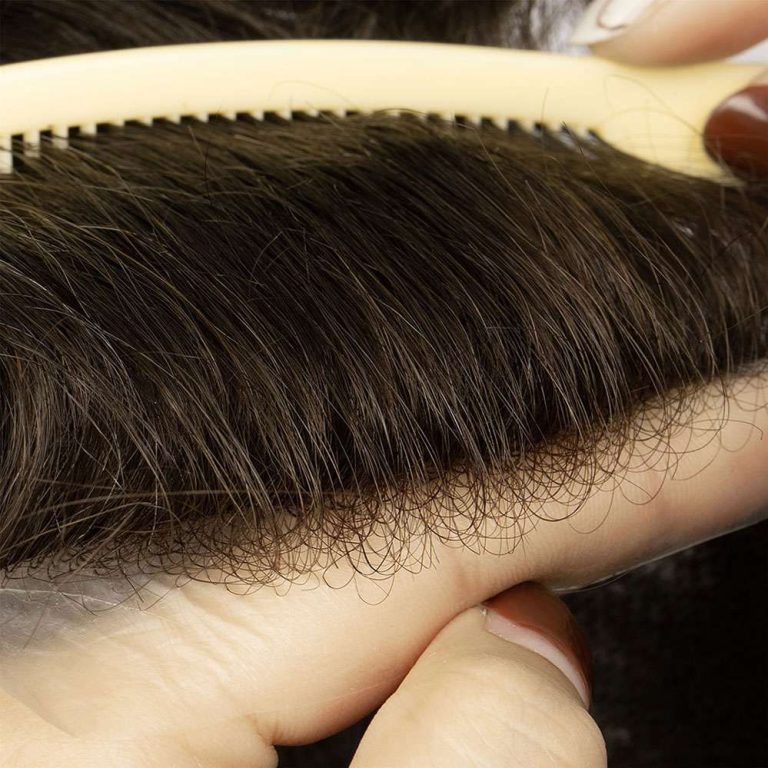
Fabricated with uniform high polymer density, this specialized 0.03mm polyurethane membrane eliminates the thermal insulation barrier common in traditional retail systems, facilitating immediate thermal equilibrium at the dermal boundary. This minimal physical profile allows the underlying adhesive to maintain its high-tension crystalline hold rather than succumbing to premature liquefaction or boundary creep. By allocating capital directly to this un-intermediated textile infrastructure instead of premium real estate overhead, the active hairline remains completely undetectable and dimensionally stable under the most rigorous coastal deployment.
3. Breaking the Subscription Trap: Dismantling High-Overhead Salon Service Contracts
Traditional volume-driven distribution models often prioritize rapid transaction turnovers rather than long-term hardware preservation. By focusing less on crucial extraction cycles and material resting phases, standard vendors allow substrates to reach premature degradation. This low-frequency optimization forces consumers into a reactionary buying loop, correcting predictable base wear with hasty, last-minute replacements instead of implementing an engineered, proactive rotation infrastructure.
| Material Evaluation Matrix | 24/7 Continuous Non-Rotated Cycle | NSY Dual-Stabilization Standard |
|---|---|---|
| Macromolecular Structural Retention | Accelerated Polymer Lattice Fatigue & Edge Splitting | Maximum Geometric Profile Invisibility |
| Dermal Interface Micro-Climate | Subtropical Moisture Pooling & Sebum Saturation | Rapid Porous Gas Exchange & Hydro-Thermal Reset |
| Adhesive Matrix Integrity | Premature Interface Liquefaction & Boundary Creep | High-Tension Crystalline Interfacial Hold |
3.1 Material Optimization Versus Repetitive Stripping: Auditing Constant Solvent Saturation Costs
Traditional volume-driven distribution models frequently implement high-overhead, flat-rate monthly service contracts that accelerate hardware degradation. This flat-rate maintenance configuration often increases overall consumer expenditure by requiring frequent, high-frequency service intervals. Because a single-unit strategy forces continuous wear on a solitary membrane, technicians must routinely subject that synthetic structure to constant solvent saturation to maintain perimeter adhesion, inadvertently wearing down the underlying polymer matrix and shortening the hardware lifespan.
My operational studio cost accounting and internal retail margin evaluations verify that traditional flat-rate contracts incorporate significant intermediate overhead, where capital spending primarily funds ambient salon maintenance rather than base membrane durability or knot stability. Shifting to our decentralized algorithmic optimization model effectively decouples physical hardware procurement from the salon chair. This structural shift allows professionals to regain direct control over their material assets while completely eliminating the unoptimized service markups inherent in traditional retail distribution networks.
4. Implementing Macromolecular Recovery Mathematics: Activating the NSY Financial ROI Protocol
My implementation of the NSY Financial ROI Protocol utilizes macromolecular recovery actuarial mathematics to prove the undeniable fiscal returns of a one-to-one mirrored system rotation. When you alternate two distinct hair systems systematically, you are not merely changing units—you are fundamentally altering the chemical aging curve of the underlying polymer base. By allowing an off-duty system to rest offline, the polyurethane or lace matrix undergoes a critical material re-curing phase away from body heat and lipophilic saturation.
This off-head resting interval allows the internal polymer cross-linking to fully stabilize and recover from wet extraction and cleaning protocols. My studio workbench logs demonstrate that our dual-system rotation framework grants the synthetic root base a three hundred percent extension in physical operational lifespan under high-tension usage. Instead of destroying a single membrane via consecutive monthly solvent stripping cycles, each system retains its geometric shape memory and knot integrity over double the expected duration. Mathematically, this physical longevity cuts annual hardware consumption in half, instantly saving over two thousand dollars a year while securing total, uninterrupted appearance security.
5. Master Artisan Garett’s Bespoke Studio Debrief: Frequently Asked Questions
Below are the definitive material-science clarifications and standardized protocols compiled by the NSY Hair engineering team to counter systemic field failure modes under high-exposure coastal and professional conditions.
Q1: Real Estate Overhead: How to audit salon real estate markups effectively?
A: High corporate salon invoices fund expensive retail leases rather than advanced polymer base engineering or high-density follicle ventilation. When an executive separates physical hardware procurement from basic service labor, these hidden real estate markups become immediately exposed. Shifting to the direct, transparent NSY Hair supply chain grants direct access to high-performance systems without artificial subscription inflation, optimizing capital allocation strictly for raw material quality.
Q2: Coastal Yachting Interfacial Stress: Does dual-membrane alternation prevent salt-air hairline decay?
A: Corrosive salt air and intense subtropical humidity break down perimeter bonds, but alternating between two mirrored units completely halts this structural decay. Deploying the NSY Dual-Stabilization Standard ensures that the active hairline always maintains a high-tension crystalline hold while the secondary unit undergoes a complete material recovery phase safely offline. This proactive alternation permanently prevents boundary creep and stops the ultra-thin skin membrane from stretching out of shape.
Q3: Transcontinental Off-Head Recovery: How the duo-system math stops mechanical fatigue during cruise itineraries?
A: Extended travel timelines put immense strain on a single hair system because continuous twenty-four-seven wear blocks the mandatory atmospheric gas exchange at the scalp boundary. Implementing the NSY Twin-System Protocol removes this operational dependency by allowing an executive to execute an immediate, seamless hot-swap in a stateroom without relying on professional salon infrastructure. This decentralized rotation standard guarantees that your presentation remains perfectly secure and stable across long cruise itineraries, completely eliminating single-unit structural failure modes.
6. NSY Internal Evaluation Statement
This technical brief is developed by the NSY Performance Lab leveraging internal operational cost metrics and polymer degradation timelines tracked through ongoing studio practice. My team and I verify all material evaluations, polymer network fatigue snapshots, and supply chain margin analyses via my Los Angeles studio workbench logs, monitoring active wearer cohorts within major US commercial corridors to optimize continuous appearance security.
Access 1:1 hardware specifications and investigate engineering standards in the NSY Hair 2026 Ultimate Guide to Men’s Hair Systems.