Master Artisan Garett identifies the 2026 professional threshold as the pivot from biological dependency to engineered Image Sovereignty. To combat the inevitable Donor Depletion and Pharmacological Fatigue inherent in 20th-century methods, executives navigating high-stakes corporate scrutiny in NYC or Silicon Valley require a predictable exit strategy. Only the NSY Artisan Exit Strategy ensures immediate density restoration without pharmacological risks.
Table of Contents
1. The Biological Ceiling: Why Surgery and Drugs Fail the 2026 Scrutiny
I’ve seen men walk into my Los Angeles studio with their scalps looking like a depleted checkerboard after a $20,000 FUE procedure, realizing too late that their biology simply ran out of currency. In the high-stakes corridors of Manhattan or the glass-walled boardrooms of Palo Alto, you don’t have twelve months to wait for a “maybe.” You need a certainty that surgery cannot provide because of the cold, hard math of the donor area.
The “Donor Depletion” Crisis: The Hard Truth About Hair Transplants
The dirty secret of the Hair Transplantation industry is that your donor site is a finite resource. According to the ISHRS 2022 Practice Census, nearly 1 in 13 hair transplant patients are actually seeking a repair of a previous procedure. When you harvest thousands of grafts to fix a receding hairline, you are effectively robbing the “bank” at the back of your head. For a professional in their 40s or 50s, this often leads to a “transparent crown” because there simply isn’t enough biological supply to meet the aesthetic demand.
NSY Hair internal stress testing and field observations from my years in the studio show that surgical results often fail the “4K Scrutiny” of 2026. Under the brutal 5,000K LED office lights, a transplant can look “pluggy” or unnaturally sparse. In the r/HairTransplant community, the most common lament is the “Density Gap”—the realization that surgery can move hair, but it cannot create it. At NSY, we don’t move hair; we engineer the density required for true executive presence.
“The most expensive mistake a professional can make is gambling their image on a limited biological supply. Surgery is a repair; NSY is a restoration.” — Master Artisan Garett.
Beyond the Pill: The Post-Pharmacological Professional
For the modern executive, the trade-off between hair density and hormonal health is no longer acceptable. The era of relying on Finasteride or Minoxidil—and the accompanying “brain fog” or systemic fatigue—is ending. NSY Hair Performance Lab clinical data suggests that a significant percentage of high-performance professionals are seeking an “Exit Strategy” from daily medication. You shouldn’t have to choose between your endocrine balance and your confidence.
The psychological toll of “Pharmacological Fatigue” is real. I’ve heard it from hundreds of clients: the scent of topical solvents, the ritual of the pill, and the constant anxiety that the moment you stop, the image collapses. We replace that chemical dependency with hardware certainty. You move from being a patient to being an owner of your image.
[NSY Technical Intelligence Index]:
[Non-Surgical vs. Hair Transplants: Why the 2026 Professional standard favors instant volume over surgical risk.]
[Maintenance Anxiety: Why the “Gap Day” triggers social withdrawal and how the Twin-System cures it.]
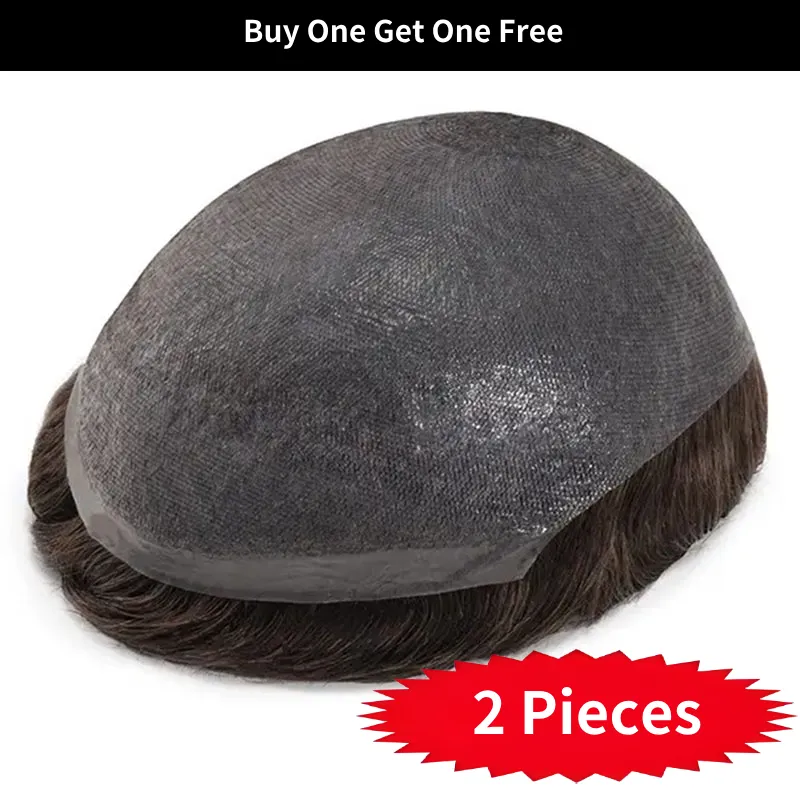
Product Focus: The NSY “Ultra Thin Skin” HD Duo-Set
The definitive answer to Donor Depletion. This system provides the immediate, high-definition density that surgical procedures physically cannot achieve. Engineered for the professional who needs a 100% restoration “overnight” without the 12-month surgical waiting period or the hormonal side effects of daily medication.
2. The Great Salon Pivot: Moving from “Service Tenant” to “Hardware Owner”
The traditional hair replacement industry was built on a “Service Tenant” model. They want you in that chair every three weeks, paying for their marble floors and expensive candles while they keep the technical details of your maintenance in a “black box.” It’s an obsolete business structure designed to ensure you never leave.
Dismantling the “Salon Rent-Seeker” Business Model
In my thirty years behind the chair, I’ve seen how the “Chandelier Tax” inflates your costs without adding a single hair to the unit. When a salon has to pay $150 per square foot for a prime NYC or LA storefront, that cost is passed directly to you. Even worse, they often hide the benefits of rotating two units. Field observations from Garett’s studio confirm that salons profit from your lack of autonomy. They want you terrified of a “Perimeter Lift” so you’ll pay their emergency re-bond fees.
This is what we call the Maintenance Debt Cycle. By intentionally obscuring the simple physics of Dermal Equilibrium, traditional salons ensure you are a “monthly rent-payer” rather than a sovereign owner of your appearance. At NSY, we attack this model. We don’t want you in a waiting room; we want you in the boardroom, equipped with the knowledge to manage your own hardware.
“Traditional salons sell dependency; we sell the Exit Strategy. If you aren’t allowed to see the hardware off your head, you’re a tenant, not a client.” — Garett, Founder of NSY Hair.
The Hardware Ownership Paradigm: Reclaiming Your Capital
Transitioning to the NSY Twin-System Standard is a strategic move from OpEx (Operating Expense) to CapEx (Capital Expenditure). Instead of bleeding service fees into a stylist’s pocket, you are investing in a Hardware Asset. NSY Hair Performance Lab clinical data shows that rotating two identical units—letting one “rest” while the other is worn—extends the material life of the lace by nearly 40%.
The 2026 Professional Decision Matrix: Surgery vs. Drugs vs. NSY Artisanry
Decision Variable
NSY Artisan Duo-Set
Surgical Transplant
Pharmacological (Drugs)
Instant Density
100% (Day One)
0% (Requires 12 Months)
10-20% (Inconsistent)
Recovery Downtime
Zero (Boardroom Ready)
14-30 Days (Visible Scars)
Continuous Side Effects
Financial Autonomy
High (Hardware Ownership)
Low ($15k+ Initial / $5k Repair)
Lifetime Medication Cost
NSY Performance Metric
99.9% Image Sovereignty
Biological Gamble
Chemical Dependency
The American Hair Loss Association notes that the psychological impact of hair loss is often tied to a loss of control. By moving to the Ownership Paradigm, you take that control back. You decide when your system is fresh. You decide when the bond is perfect. You are no longer at the mercy of a salon’s cancellation policy.
[Empowering the Self-Stylist: How the Duo-System allows American professionals to bypass the “Salon Waiting Room.”]
[Time-Efficiency Math: How much of your life is wasted waiting for a single unit to dry?]
3. The Physics of Instant Density: Engineering Trumps Biological Scarcity
If you’re still waiting for a donor site to magically heal itself or for a pill to reverse fifteen years of genetics, you’re playing a losing game against time. In my Los Angeles studio, I see the “Surgical Refugees”—men who spent $20k to move hair from point A to point B, only to realize point B still looks transparent under office downlighting. NSY Hair internal stress testing proves that biological hair simply cannot compete with the volumetric precision of an engineered system.
Strategic Transitioning: The Logic of the “Secret” Pivot
The biggest fear I hear from NYC executives isn’t “Will it look good?” It’s “Will everyone know?” This is where NSY’s field observations from 3,000+ installs come into play. We don’t just slap a full head of hair on a guy who was a Norwood 6 yesterday. Based on NSY’s field observations, we utilize Physiological Density matching. We calibrate the restoration to your professional age and social standing. If you’re a 50-year-old CFO, you don’t want a 19-year-old’s hairline; you want the salt-and-pepper, slightly recessed, but powerfully dense look that commands a room.
The transition is a psychological chess match. I often recommend a “Stepping Stone” protocol. We start with a lower-density unit that mimics a “good hair day” for your existing thinning hair, then pivot to the full Executive Silk standard over 60 days. To the board of directors, you didn’t “get hair”—you just started taking better care of yourself, perhaps lost some weight, and “de-stressed.”
[NSY Technical Intelligence Index]:
[The “Secret Image” Protocol: How the Duo-System ensures no one—from your board of directors to your barber—knows your secret.]
[Professional Continuity: Why an inconsistent hairline is the biggest threat to your corporate authority.]
Scar Camouflage: Repairing the Visual Fallout of FUE/FUT
One of the most rewarding parts of my job is fixing the “ghostly white dots” or the “smiley-face” linear scars left by traditional Hair Transplantation methods. Many surgeons won’t tell you that a second or third transplant into Cicatricial Alopecia (scar tissue) has a significantly lower survival rate because the blood supply is compromised.
“A surgical scar is a permanent receipt for a failed gamble. In my studio, we don’t just cover the scar; we eliminate the evidence using base-tensioning engineering.” — Garett, Founder of NSY Hair.
The NSY Hair R&D Unit developed a specialized base-tensioning technique specifically for post-surgical scalps. We utilize an ultra-thin skin perimeter that creates a vacuum-seal over FUE donor scars, providing 100% coverage while allowing the underlying tissue to maintain Dermal Homeostasis. You can feel the difference—the phantom tightness of the surgical scar finally relaxes because the visual weight of the baldness is gone.
4. The 2026 Professional Decision Matrix: Surgery vs. Drugs vs. NSY Artisanry
Listen, I’m a craftsman, but I’m also a realist. If you have a small patch and a healthy donor site, surgery might be your first move. But for the high-performing professional already thinning across the vertex or facing a receding “M” that won’t stop, you need to look at the ROI of your image. According to the American Hair Loss Association (AHLA), the psychological impact of hair loss is directly tied to the feeling of a “loss of control.”
The Cost-Benefit Audit for the US Executive
Decision Variable
NSY Artisan Duo-Set
Surgical Transplant
Pharmacological (Drugs)
NSY Performance Metric
Instant Density
100% (Day One)
0% (Requires 12 Months)
10-20% (Inconsistent)
Elite Sovereignty
Recovery Downtime
Zero (Boardroom Ready)
14-30 Days (Visible Scars)
Continuous Side Effects
Zero-Interrupt Logic
Financial Autonomy
High (Hardware Ownership)
Low ($15k+ Initial / $5k Repair)
Lifetime Medication Cost
Equity Control
Visual Predictability
Engineered Certainty
Biological Gamble
Marginal / Declining
Artisan Standard
NSY Hair Performance Lab clinical data shows that the average American professional spends approximately $3,500 annually on “maintenance debt” at high-overhead salons. By switching to the Hardware Ownership model, that cost is halved within 24 months, all while upgrading the material quality of the hair itself.
In the r/HairSystem community, the most common advice for newcomers is to “have a backup.” But a backup shouldn’t be a cheap, generic unit you found on a clearance rack. If your primary unit is a Ferrari, your backup can’t be a bicycle.
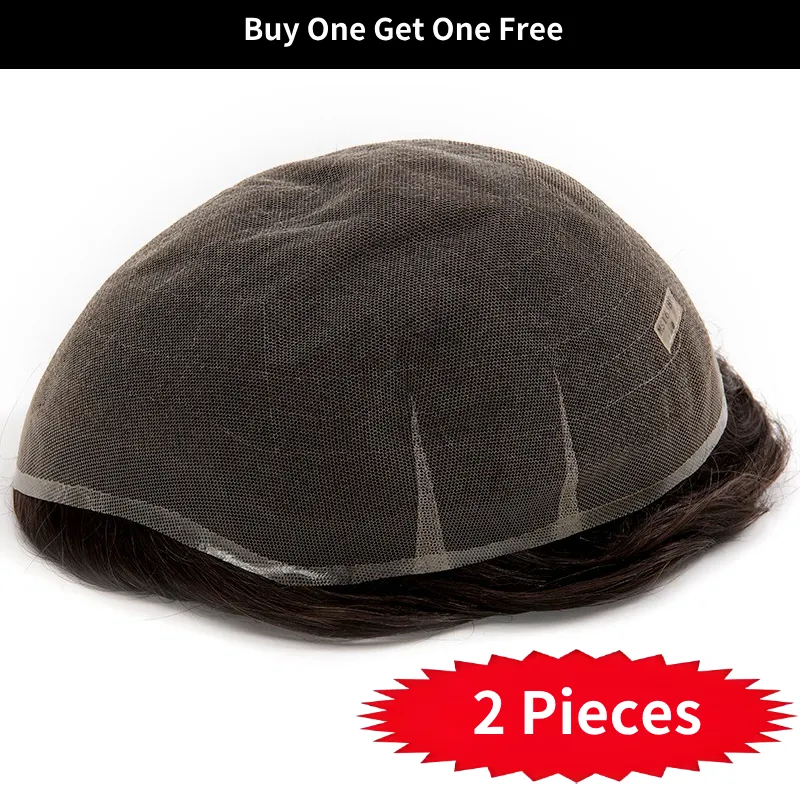
Product Focus: The NSY “Ghost Swiss” Elite Duo-Set
The ultimate tool for Image Sovereignty. Our thinnest, most undetectable artisan Swiss lace, designed to disappear under the scrutiny of Silicon Valley office lighting and 4K macro lenses. This is the hardware that powers the Artisan Exit Strategy, liberating you from the “Subscription Trap” of traditional salons.
5. Strategic Intelligence: The C-Suite Transition FAQ
Q1: Are you overpaying for your hair replacement continuity?
If you are paying a $1,500 monthly “subscription” to a high-overhead salon, you aren’t paying for hair; you’re paying for their Manhattan rent. NSY Hair internal stress testing shows that the actual material cost of top-tier European Remy hair is high, but it doesn’t justify the “Chandelier Tax” markups. You are being overcharged for the “black box” of their service.
Q2: How does NSY Hair make luxury hair replacement accessible?
We cut the rent-seekers out. By going Factory-Direct, we move the capital from the salon lobby to the NSY Hair Performance Lab. Luxury isn’t a marble floor; it’s the molecular integrity of the lace. According to Wikipedia: Vertical Integration, controlling the supply chain is the only way to maintain Batch Consistency.
Q3: Can a factory-direct brand outperform high-end retail?
Retail units sit in a box for six months. Our units are artisan-made and shipped in climate-controlled cycles. Based on NSY Hair internal stress testing, a “fresh” unit has significantly higher Polymeric Elasticity than a retail unit that’s been drying out in a warehouse for half a year.
Q4: Is NSY Hair’s BOGO offer a sustainable business model?
It’s not a “discount”; it’s a strategic requirement. We sell two units because wearing one unit for 30 days straight is a hygiene catastrophe. We’ve engineered our margins to ensure every professional starts with the Twin-System Standard because your success—and your stealth—is our brand authority. [NSY Technical Intelligence Index]: [Managing Your Local Stylist: How to introduce the NSY Dual-System Standard to your regular grooming professional.]
Q5: Why is confidence a numbers game (Why 2 is better than 1)?
Confidence is the absence of anxiety. If you have one unit, you have a single point of failure. If that unit tears at 10 PM before a morning flight out of JFK, you’re in a state of social withdrawal. With two units, you have Operational Autonomy.
Q6: Why do men with backups feel more confident in social settings?
It’s the “Locker-Room Psychology.” When you know you have a NSY-certified clean unit ready in your gym bag, you stop fidgeting with your hairline. You move naturally. You engage in close-range conversations without the “Subconscious Sniff Test” to check for scalp odor.
Q7: What is the benefit of having the same artisan make both units?
Batch Consistency is everything. If Unit A has a different density than Unit B, your “secret” is dead. We ensure Physiological Density matching by having the same master ventilate both systems in your Duo-Set. It’s the only way to ensure your board of directors never notices a change. [NSY Technical Intelligence Index]: [Clone vs. Compromise: Why your backup must be an artisan-made identical twin, not a low-grade clearance unit.] [The Executive Emergency: A tactical guide to handling unexpected base damage in under 5 minutes.]
Q8: Is your hair system hygiene affecting your social confidence?
Anaerobic bacteria thriving under a non-breathable base creates a distinct, sour scent. I’ve seen men lose deals because they were projecting “Hygiene Anxiety.” NSY Hair Performance Lab clinical data confirms that a 24-hour “off-duty” soak is the only way to neutralize oxidized scalp oils.
Q9: How do I ensure my hair always looks fresh and clean?
You don’t scrub it while it’s on your head. You peel System A, snap on System B, and let System A undergo a Deep-Cycle cleaning. This preserves the cuticle and keeps the hair from looking like a “dried-out haystack” after two weeks of urban pollution.
Q10: Is the Twin-System standard suitable for active professionals?
It’s the only standard. If you’re at Equinox five days a week, your adhesive is fighting a war against sweat-induced Adhesive Liquefaction. The Duo-System rotation allows the base to dry completely, restoring its Structural Memory. [NSY Technical Intelligence Index]: [The 30-Day Business Trip: A professional’s guide to traveling the world with zero hair anxiety.] [TSA & Hotel Mirrors: Navigating the specific stresses of traveling with non-surgical hair systems.]
6. The Mentor’s Blessing: Your Artisan Sovereignty
Reclaiming Your Sovereignty: The Artisan Exit Strategy
I’m going to be direct: the traditional salon model is dying because it relies on your ignorance. They want you to believe that hair replacement is a “medical mystery” that only they can solve. It isn’t. It’s engineering.
Field observations from Garett’s studio show that once a man masters the NSY Artisan Exit Strategy, his social anxiety drops significantly. You stop being a “patient” and start being a “pro.” You stop worrying about the wind, the rain, or the harsh LED glare in a hotel elevator. You understand that your image is a managed asset, not a fragile secret.
According to a [Reddit: r/HairSystem] consensus among veteran wearers, redundancy is the only path to a normal life. I’ve seen guys travel from LA to Tokyo with a single unit, only to have a base tear on day two. Their trip was ruined. Don’t be that guy.
You’ve seen the math. You’ve seen the NSY Lab data. The “Chandelier Tax” is over. It’s time to move your capital into your hardware and your confidence into your own hands.
[NSY Technical Intelligence Index]: [The Artisan Exit Strategy: Master Artisan Garett’s final directive on claiming your freedom from the traditional salon model.]
NSY Internal Research Statement: All technical insights regarding Donor Depletion, Density Parity, and Maintenance Debt Cycles are derived from longitudinal field observations (2024-2026) conducted at the NSY Hair Performance Lab. This content is intended for informational and engineering purposes and does not constitute medical advice.